How Much Does a Website Cost in the UK in 2026?
By UXplorers Team
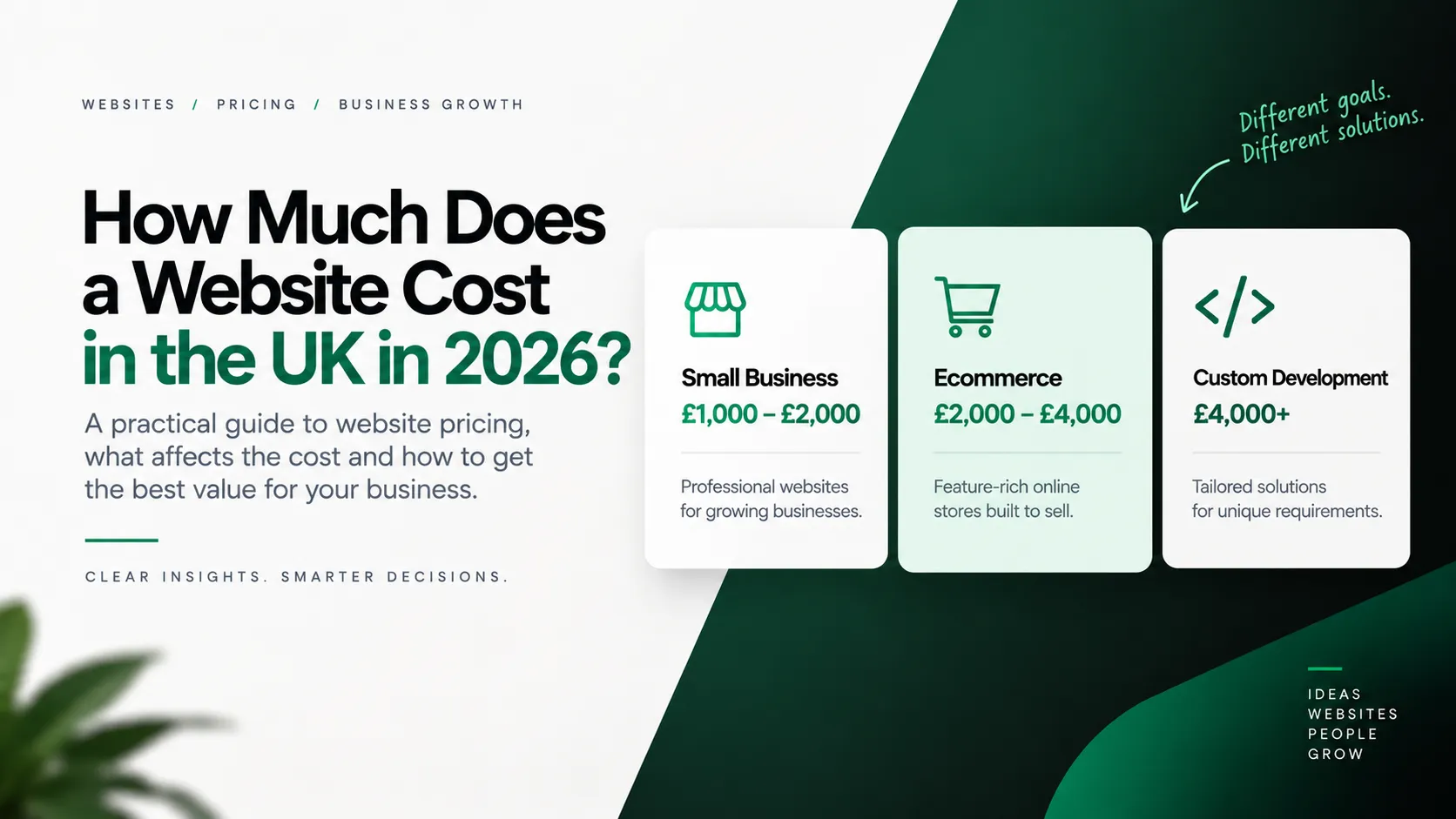
If you're planning a new website for your business, one of the first questions you'll probably ask is: how much is it going to cost?
The answer isn't always straightforward. Website prices in the UK can vary significantly depending on what you're building, how it is designed, the technology behind it and the level of expertise involved.
A simple business website and a bespoke ecommerce platform are fundamentally different projects. Understanding where the cost comes from can help you set a realistic budget and, more importantly, invest in a website that supports your business rather than simply existing online.
Why Do Website Costs Vary So Much?
A website isn't a single product with a fixed price. The cost is usually determined by the amount of strategy, design, content, development and functionality required. A small service business might need five carefully designed pages and a contact form. An ecommerce company may need hundreds of products, payment processing, customer accounts, integrations and sophisticated filtering. Even two websites with the same number of pages can have very different costs depending on how much research, UX thinking and customisation goes into them.
- Number of pages and complexity of the website
- Bespoke design versus pre-built templates
- Ecommerce and payment functionality
- Custom features and integrations
- UI and UX design requirements
- Copywriting and content creation
- SEO requirements
- CMS and technology choice
- Mobile and responsive optimisation
- Testing, maintenance and ongoing support
Typical Website Costs in the UK
There is no universal price list, but understanding broad ranges can help when setting your budget. A basic website using an existing template may cost anywhere from a few hundred pounds to around £1,500. A professionally designed small business website will commonly fall somewhere between £1,500 and £5,000 depending on the scope, content and level of customisation. More sophisticated ecommerce websites, membership platforms and websites requiring custom functionality can cost £5,000 to £15,000 or considerably more. Fully custom web applications and digital platforms can move well beyond these figures because they involve software development rather than conventional website development. These figures should be treated as general guidance rather than fixed market rates.
Template vs Bespoke Website Design
One of the biggest factors affecting cost is whether your website is built around an existing template or designed specifically for your business. Templates can be perfectly suitable when budgets are limited and requirements are simple. The compromise is that your business has to fit within a design originally created for a broad audience. Bespoke design starts differently. The structure, user journeys, content hierarchy and interface can be designed around your audience and business objectives. At UXplorers, we believe design decisions should have a reason behind them. A button shouldn't exist somewhere simply because that's where a template placed it. Its position, wording and prominence should help guide the user towards the right action.
What Are You Actually Paying For?
When comparing website quotations, it is tempting to compare only the final numbers. The problem is that two proposals describing a "10-page website" may include completely different levels of work. Professional website projects can involve discovery, competitor research, sitemap planning, UX design, UI design, copywriting, development, responsive optimisation, testing, analytics and launch support. The visible website is only the final output. Much of the value comes from the thinking that happens before it is built.
- Discovery and understanding your business
- Competitor and market research
- Website architecture and user journeys
- UX and UI design
- Conversion-focused copywriting
- Responsive development
- Performance optimisation
- Technical and on-page SEO foundations
- Browser and device testing
- Analytics and tracking setup
- Launch support and ongoing maintenance
What About WordPress, Shopify and Custom Development?
Technology also influences the cost. WordPress can be an excellent option for service businesses, corporate websites and content-driven sites because it offers flexibility and straightforward content management. Shopify is often a strong choice for ecommerce businesses because much of the commerce infrastructure is already provided. Custom development becomes valuable when a business requires functionality, integrations or user experiences that cannot be efficiently achieved with an existing platform. The right choice shouldn't simply be whichever technology is cheapest. It should depend on what the website needs to accomplish.
Don't Forget the Ongoing Costs
Launching the website isn't necessarily the end of the investment. Depending on your setup, you may have ongoing costs for hosting, domain renewals, software licences, security, backups, maintenance, SEO and content. These costs should be discussed before development begins so you understand the total cost of owning and operating the website.
Cheap Websites Can Become Expensive
A low upfront price can be attractive, particularly for a new business. But price alone doesn't tell you whether a website represents good value. If the website is slow, difficult to navigate, hard to update or fails to generate enquiries, rebuilding it twelve months later can cost considerably more than approaching the project properly from the beginning. The better question isn't simply "How cheaply can we build this?" It's "What does our business need this website to achieve?"
How Much Should Your Business Spend?
Start with your objectives rather than an arbitrary budget. Consider how important the website is to your business, what customers need to accomplish on it and what a new customer or enquiry is worth to you. For some businesses, the website is essentially an online brochure. For others, it is their primary sales channel. Those two businesses shouldn't necessarily make the same investment.
Building the Right Website for Your Business
At UXplorers, we approach websites from the user's perspective first. We combine UX strategy, UI design, content and development to create websites that are easy to understand, enjoyable to use and aligned with real business goals. Whether you need WordPress, Shopify or custom development, the technology comes after understanding what you're actually trying to achieve. If you're planning a new website and aren't sure what approach or budget makes sense, speak with UXplorers. We can help you understand your options before you commit to a particular solution.