10 Signs Your Business Website Needs a Redesign
By UXplorers Team
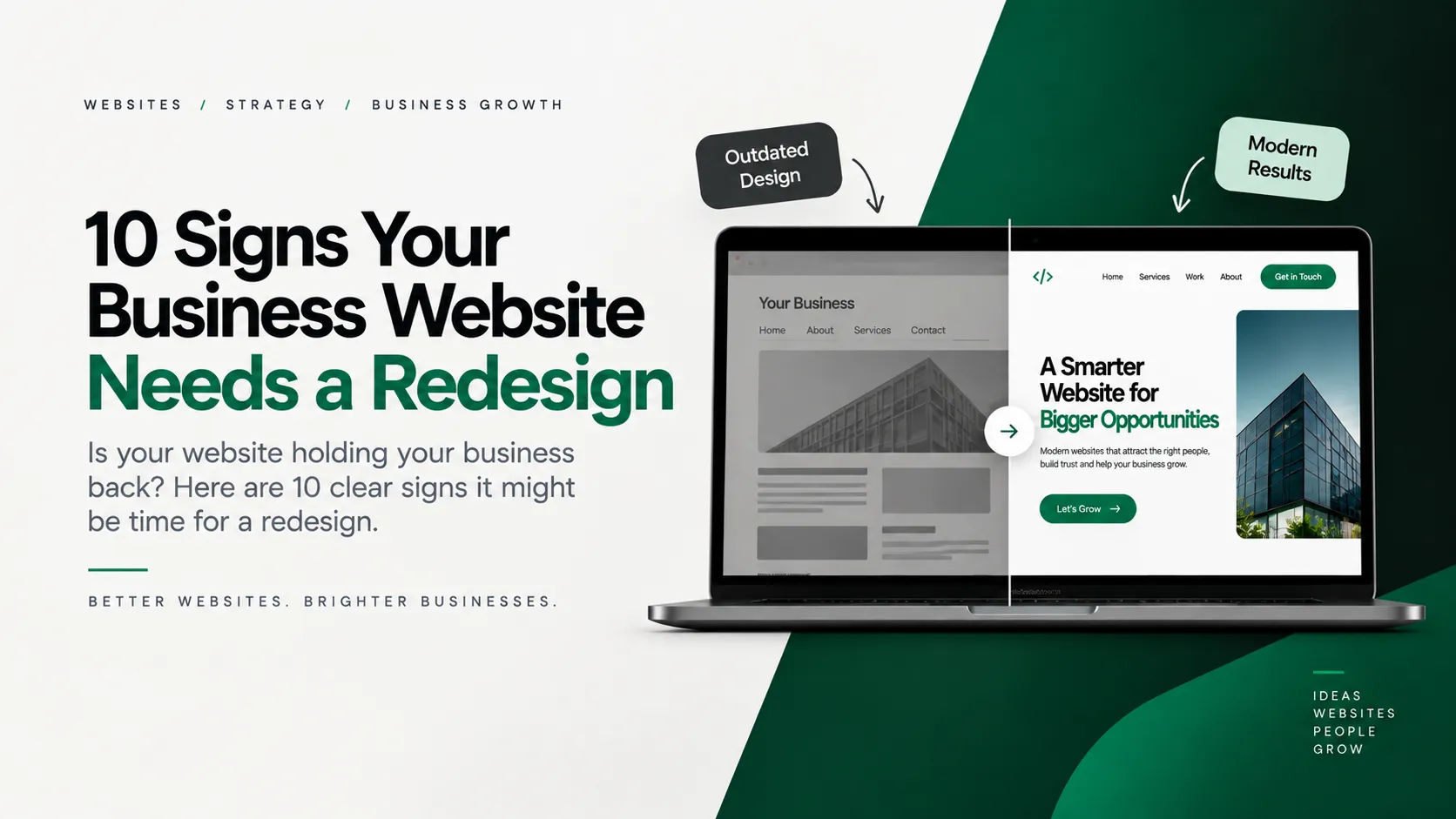
Your website doesn't need to look completely broken to be hurting your business.
It can load, display your services and even generate occasional enquiries while still creating unnecessary friction for potential customers.
The important question isn't simply whether your website works. It's whether it works well for the people using it.
Here are ten signs your business website may be ready for a redesign.
1. Your Website Looks Outdated
People form impressions quickly online. If your website looks noticeably older than those of your competitors, visitors may subconsciously associate that experience with the business behind it.
A redesign isn't about following every visual trend. Good design should feel current while remaining clear, usable and appropriate for your brand.
2. Your Website Is Difficult to Use on Mobile
Responsive design is no longer optional.
Users shouldn't need to zoom, fight with tiny buttons, navigate awkward menus or scroll sideways to use your website.
A strong mobile experience considers more than simply shrinking the desktop design. Navigation, typography, forms, images and calls to action should all work naturally on smaller screens.
3. Your Website Is Slow
Every unnecessary delay creates another opportunity for someone to leave.
Large images, excessive plugins, poor hosting and inefficient development can all affect performance.
Speed also influences the overall perception of your business. A responsive website feels polished and dependable. A slow one creates friction before the visitor has even explored what you offer.
4. Visitors Don't Know What You Do
Open your homepage and imagine you know absolutely nothing about your company.
Can you understand what the business does, who it helps and what you should do next within a few moments?
If not, the problem may not be visual design at all. It could be messaging and information hierarchy.
Clarity should come before cleverness.
5. Your Navigation Is Confusing
Navigation should reduce the amount of thinking required from the user.
Too many menu items, unclear labels, deeply nested pages and inconsistent navigation patterns create cognitive load.
Visitors shouldn't need to learn how your website works. The interface should make the next step feel obvious.
6. You're Getting Traffic but Not Enough Enquiries
Traffic is useful only when the website does something with it.
If people are visiting but rarely calling, purchasing, booking or submitting enquiries, investigate what happens between landing and conversion.
The problem could be weak calls to action, unclear messaging, insufficient trust, complicated forms or a user journey containing too much friction.
A redesign should address these problems rather than simply changing colours and typography.
7. Important Actions Take Too Many Steps
Every unnecessary interaction adds friction.
Imagine a restaurant making customers navigate four menu levels before seeing its food, or a service business hiding its booking option behind several pages.
Good UX reduces unnecessary decisions and gets users where they need to go efficiently.
8. Your Website No Longer Represents Your Business
Businesses evolve.
Your services may have changed, your positioning may be different and your customers may no longer be the same people you targeted when the website was originally built.
If your website represents the company you were three years ago rather than the company you are today, updating individual paragraphs may not be enough.
9. Customers Don't Trust the Website
Trust is created through hundreds of small signals.
Professional presentation, clear contact information, authentic testimonials, recognisable clients, case studies, transparent information and consistent branding can all reduce uncertainty.
Poor typography, broken links, outdated information and inconsistent design can do the opposite.
People may never consciously say "I don't trust this website." They simply leave.
10. Updating Your Website Is a Nightmare
Your website should support the people managing it as well as the customers using it.
If changing a photograph, adding a service or updating a page requires contacting a developer every time, your current setup may no longer suit the business.
A modern CMS should give your team appropriate control without compromising the design.
Does Your Website Actually Need a Full Redesign?
Not necessarily.
Sometimes the underlying website is perfectly good and improvements to content, navigation, performance or specific pages are enough.
That's why we don't believe businesses should redesign websites purely because they are a few years old.
A redesign makes sense when there are identifiable problems that the new website is intended to solve.
- Poor user experience or confusing navigation
- Low conversion rates despite meaningful traffic
- Weak mobile usability
- Outdated branding or messaging
- Slow website performance
- New services or business positioning
- Technology that is difficult to maintain
Redesign Around Your Users, Not Trends
At UXplorers, we believe successful website redesigns begin with understanding people.
Before deciding how a website should look, we consider what users are looking for, what questions they have, what could make them hesitate and what actions the business wants them to take.
The result should not simply be a prettier version of the old website. It should be a clearer, faster and more effective experience.
If you're unsure whether your website needs a complete redesign or a few targeted improvements, UXplorers can help you identify where the biggest opportunities are.